
Vocal tuning · trap · drill
Autotune plug-in.
From natural to the hard effect.
“Autotune” is the everyday name for pitch correction. The same plug-in gives you invisible fixes on a ballad and the hard, stepping vocal you know from trap.
How it works
The plug-in detects the pitch you sing and moves it to the nearest note of the chosen key and scale. The main control is retune speed — how fast the voice snaps to the note. At 0–10 ms transitions are instant and you get the trap effect; at 40–80 ms the correction is smooth and barely audible. Humanize keeps natural movement on long notes.
In trap, drill and rap
In trap the hard effect is part of the sound — singers track with it in their headphones and play it like an instrument. Melodic drill often uses a slightly slower setting to keep the aggression. In rap it's often only on the hook.
Watch out for
The key is everything: a plug-in set to C major on a C♯ minor beat pulls notes to the wrong place. Put tuning first in the chain, clean up breaths and sibilants before it, and remember it only fixes pitch — not timing or delivery.
DarkPlugins vocal tuning and effects
All plug-ins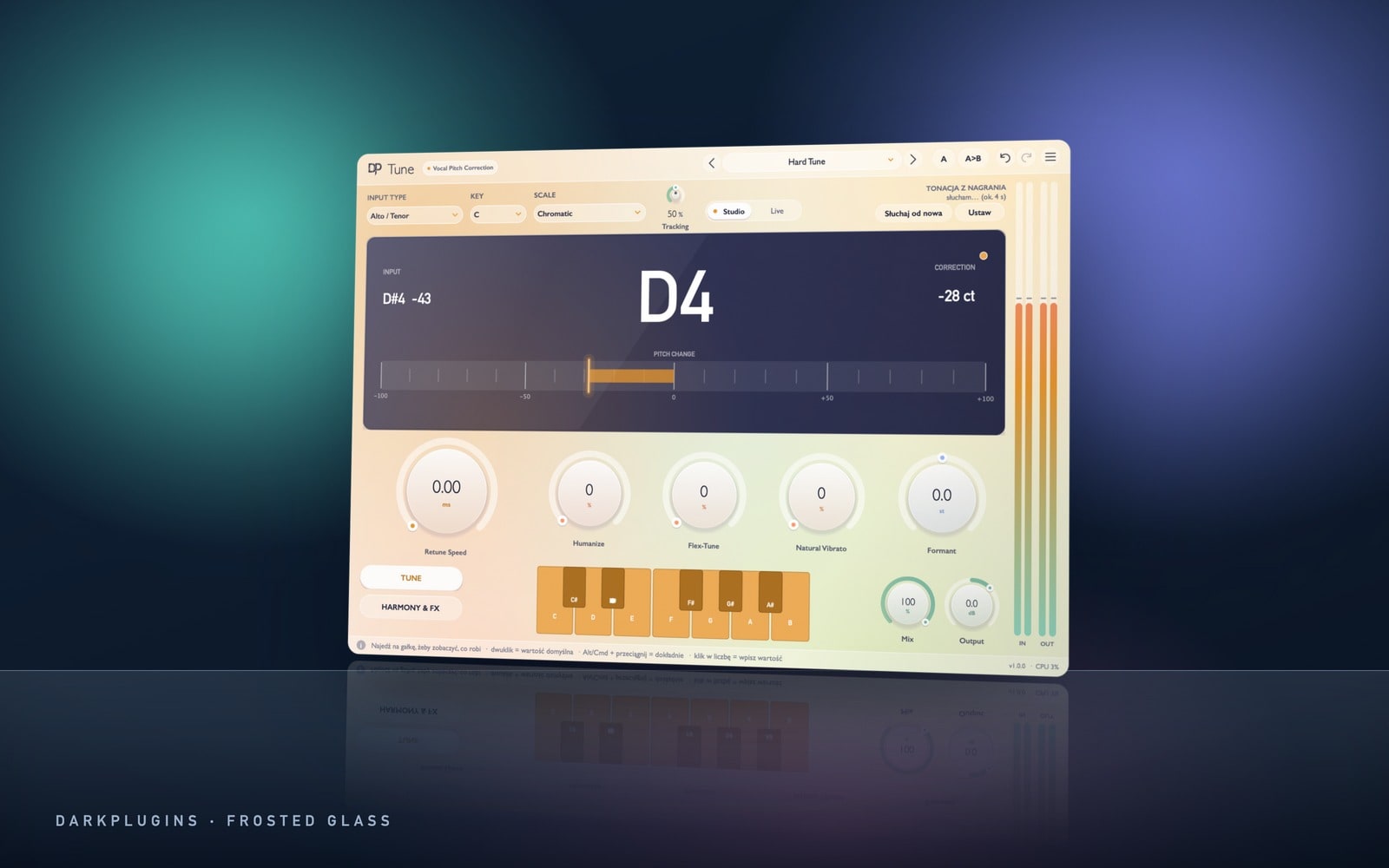 Tune249 złReal-time tuning: key and 16 scales, retune speed, Humanize, Flex-Tune and MIDI target notes.Vocals
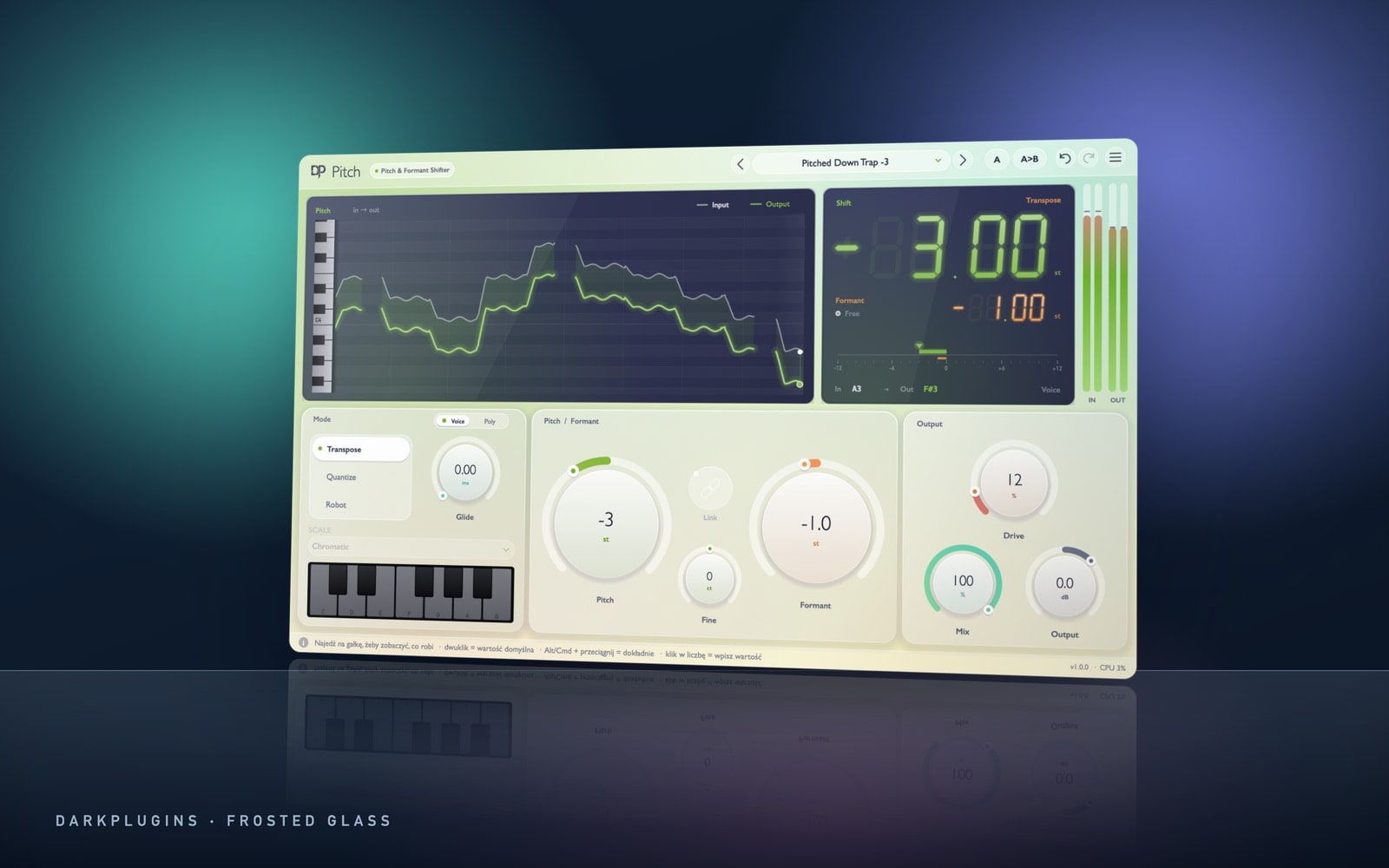 Pitch99 złQuantize snaps to the scale with glide, Robot holds one note — plus formants and pitched ad-libs.Vocals
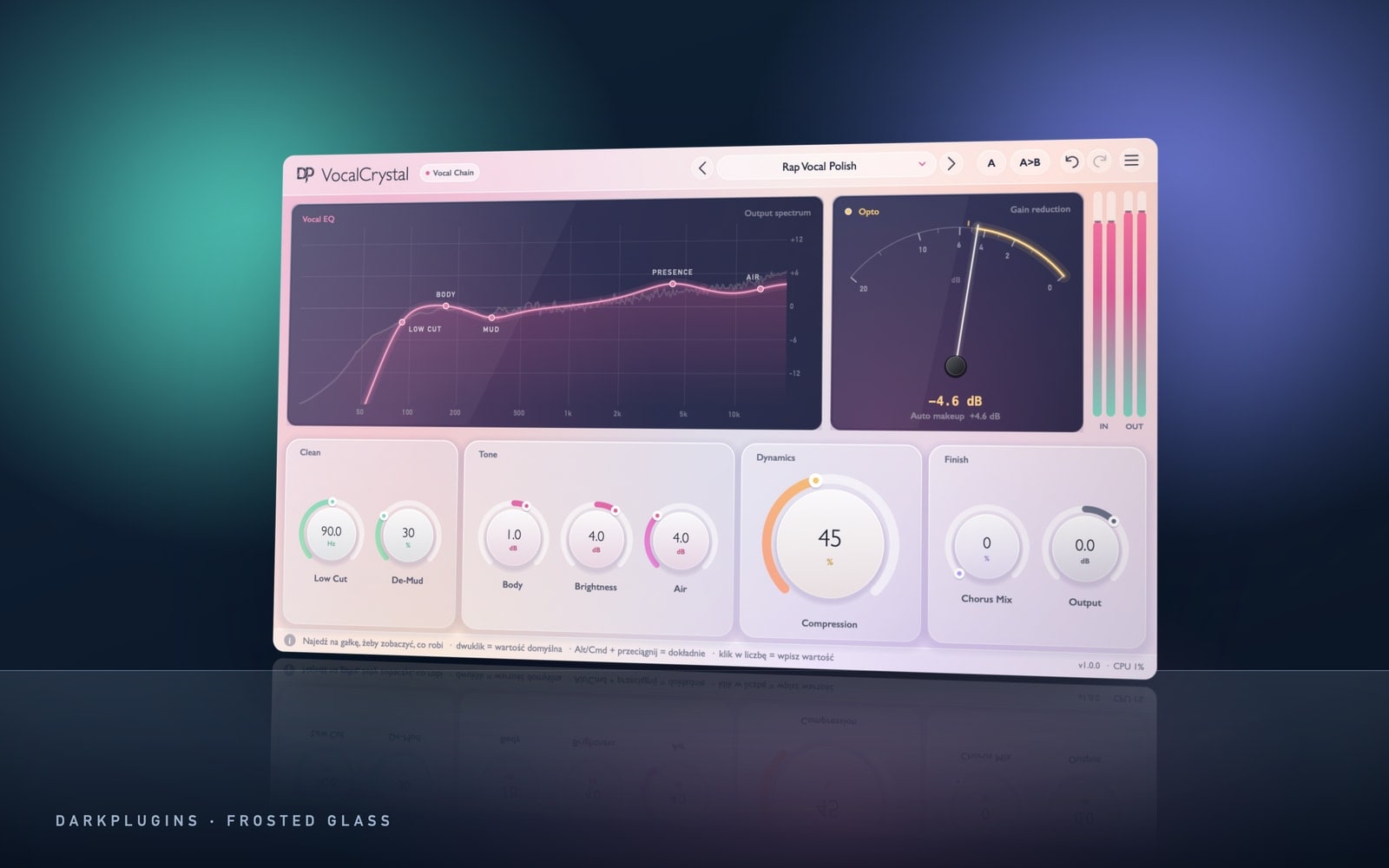 VocalCrystal99 złAfter tuning: low cut, De-Mud, opto compression and air in one window.Vocals
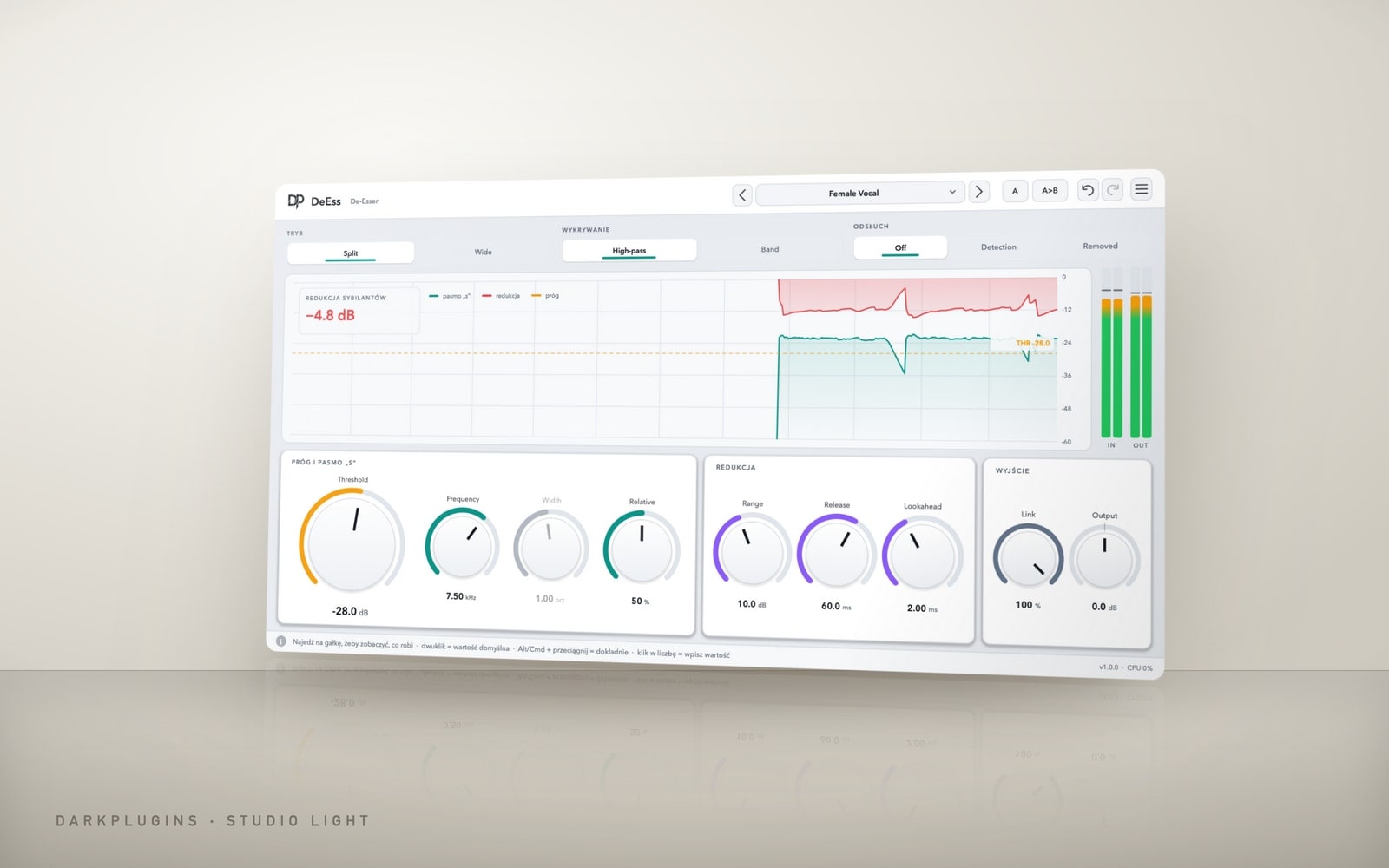 DeEss79 złThe hard effect exposes S sounds — DeEss turns them down exactly when they appear.Vocals
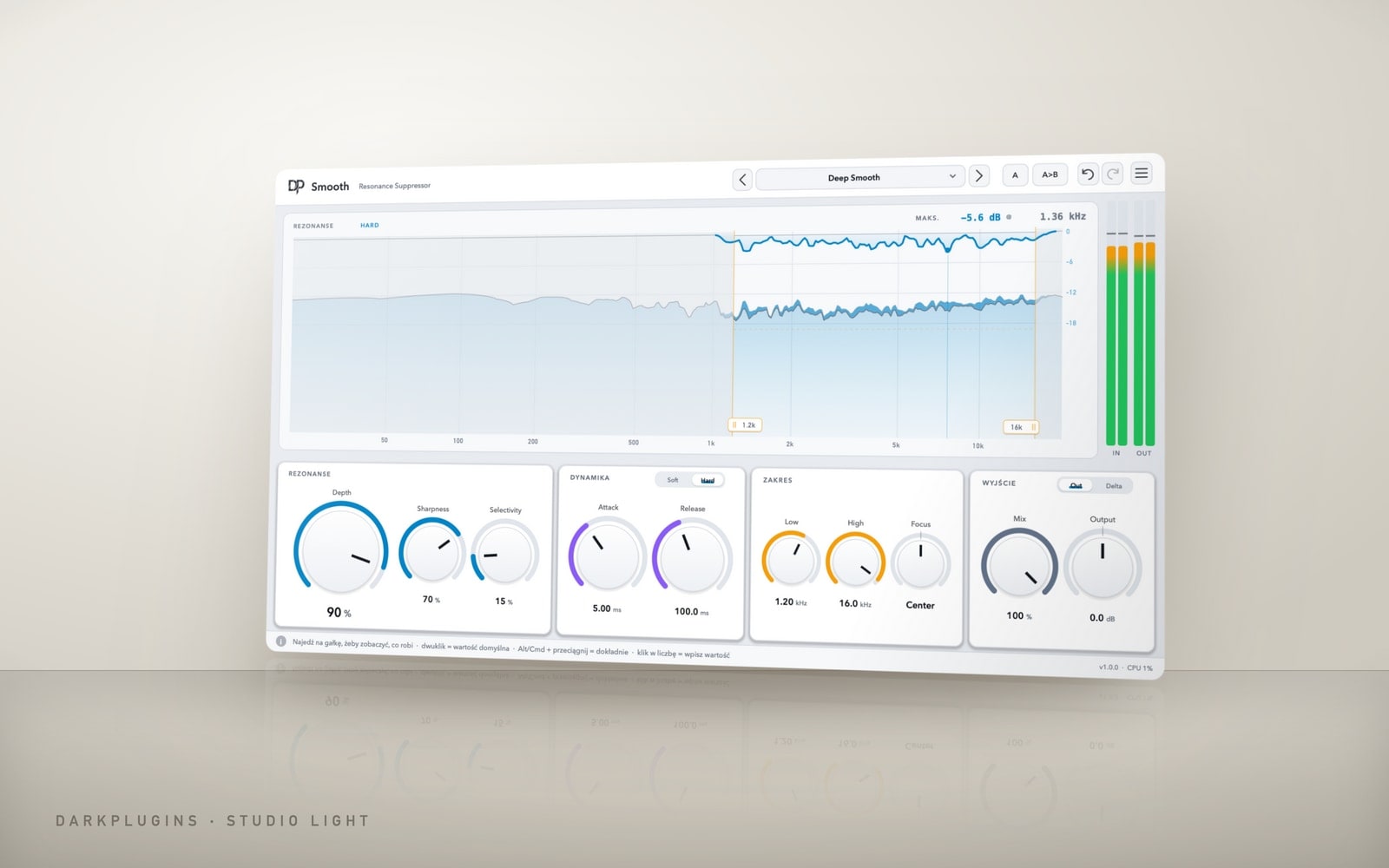 Smooth149 złHard-tuned vocals can turn glassy at 2–5 kHz — Smooth calms it only when it bites.EQ & dynamics
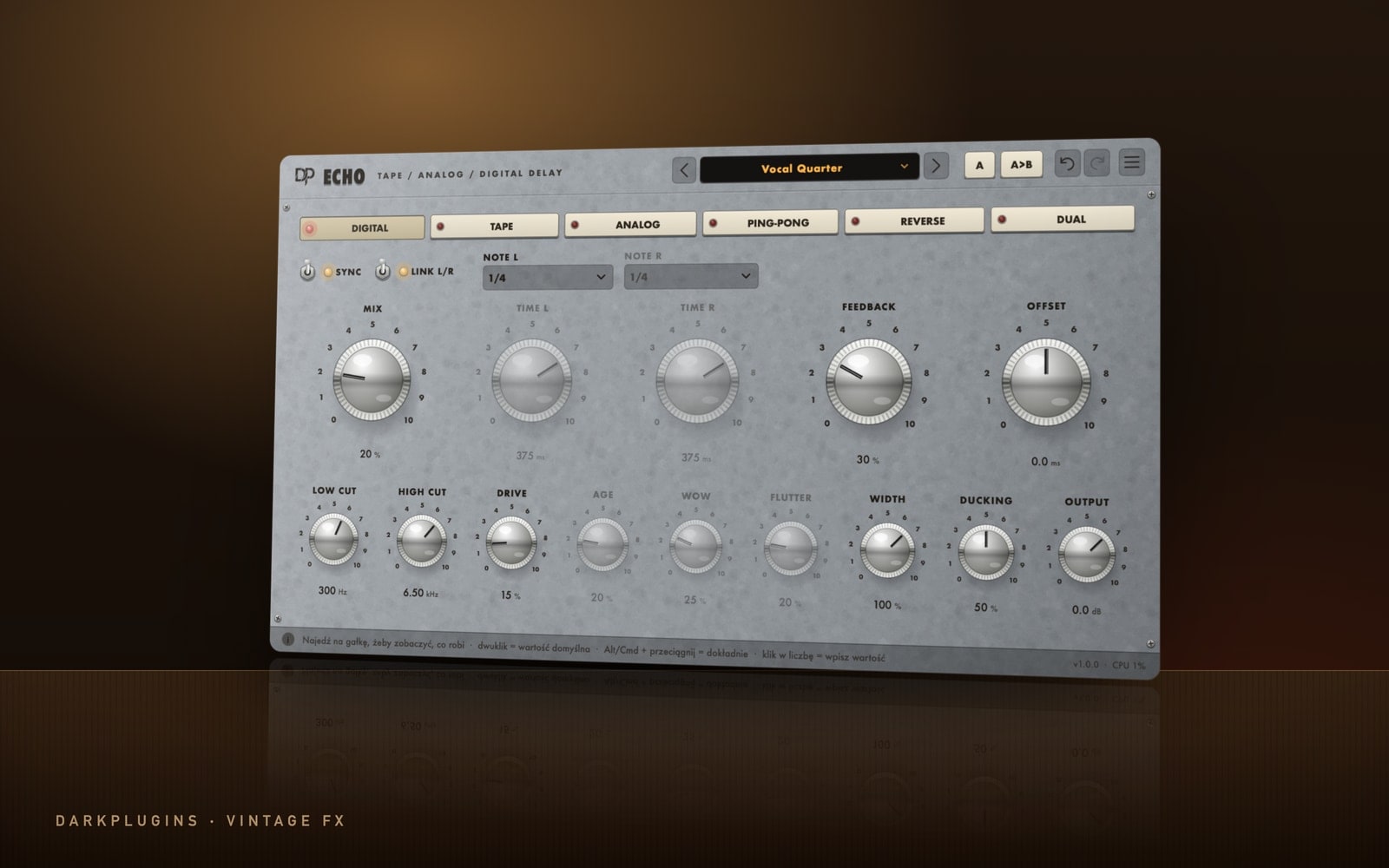 Echo99 złDelay throws on the ends of tuned lines: tape, ping-pong, tempo sync and ducking.Reverb & delay
VocalsTune
249 złReal-time tuning: key and 16 scales, retune speed, Humanize, Flex-Tune and MIDI target notes.
VocalsPitch
99 złQuantize snaps to the scale with glide, Robot holds one note — plus formants and pitched ad-libs.
VocalsVocalCrystal
99 złAfter tuning: low cut, De-Mud, opto compression and air in one window.
VocalsDeEss
79 złThe hard effect exposes S sounds — DeEss turns them down exactly when they appear.
EQ & dynamicsSmooth
149 złHard-tuned vocals can turn glassy at 2–5 kHz — Smooth calms it only when it bites.
Reverb & delayEcho
99 złDelay throws on the ends of tuned lines: tape, ping-pong, tempo sync and ducking.
All in One
Every plug-in free for 14 days.
Full versions, no card needed. Once per account and per computer.
Questions
How do I set autotune for trap?
Set the key of the beat, retune speed to 0–10 ms and humanize near zero. If long notes sound too harsh, raise humanize or retune speed to 15–25 ms.
Which key should I pick in autotune?
The key of the beat. A detector helps, but confirm by ear — the classic mistake is confusing a minor key with its relative major (A minor and C major).
Will autotune fix any off-key note?
No. It fixes pitch, not timing, delivery or tone. Very off notes can be pulled to the wrong pitch — re-record the phrase instead.
Can I record with autotune live?
Yes, and in trap it's standard — singers perform better hearing the effect. Use a 64–128 sample buffer and no high-latency plug-ins on the track.
How is autotune different from a pitch shifter?
Autotune pulls the voice to scale notes. A pitch shifter moves the whole voice by a fixed number of semitones — for lowered ad-libs, octave doubles or chipmunk effects.
Related guides
All guides- VocalsTrap vocal chain, step by stepPlug-in order for rap and trap vocals: tuning, EQ, two compressors, de-esser, air and sends — with settings in Hz, dB and ms.2 min read
- TheoryHow to match the key of a sample and a melodyChecking a sample's key, when not to trust the detector, how far you can transpose and how to keep the 808 and the melody in key.2 min read