Vocals
Trap vocal chain, step by step
A great trap vocal isn't one magic plug-in. It's a few simple steps in the right order, each doing one job.
DarkPlugins2 min read
In this guide 7
Record it right
Record at 24-bit with peaks around −10 to −6 dBFS. Turn breaths down 6–10 dB instead of deleting them, and even out phrases with clip gain before any compressor touches them.
The order
- Pitch correction.
- EQ cuts.
- Fast compressor.
- Slow compressor.
- De-esser.
- Saturation and EQ boosts.
- Reverb and delay on sends.
Tuning first
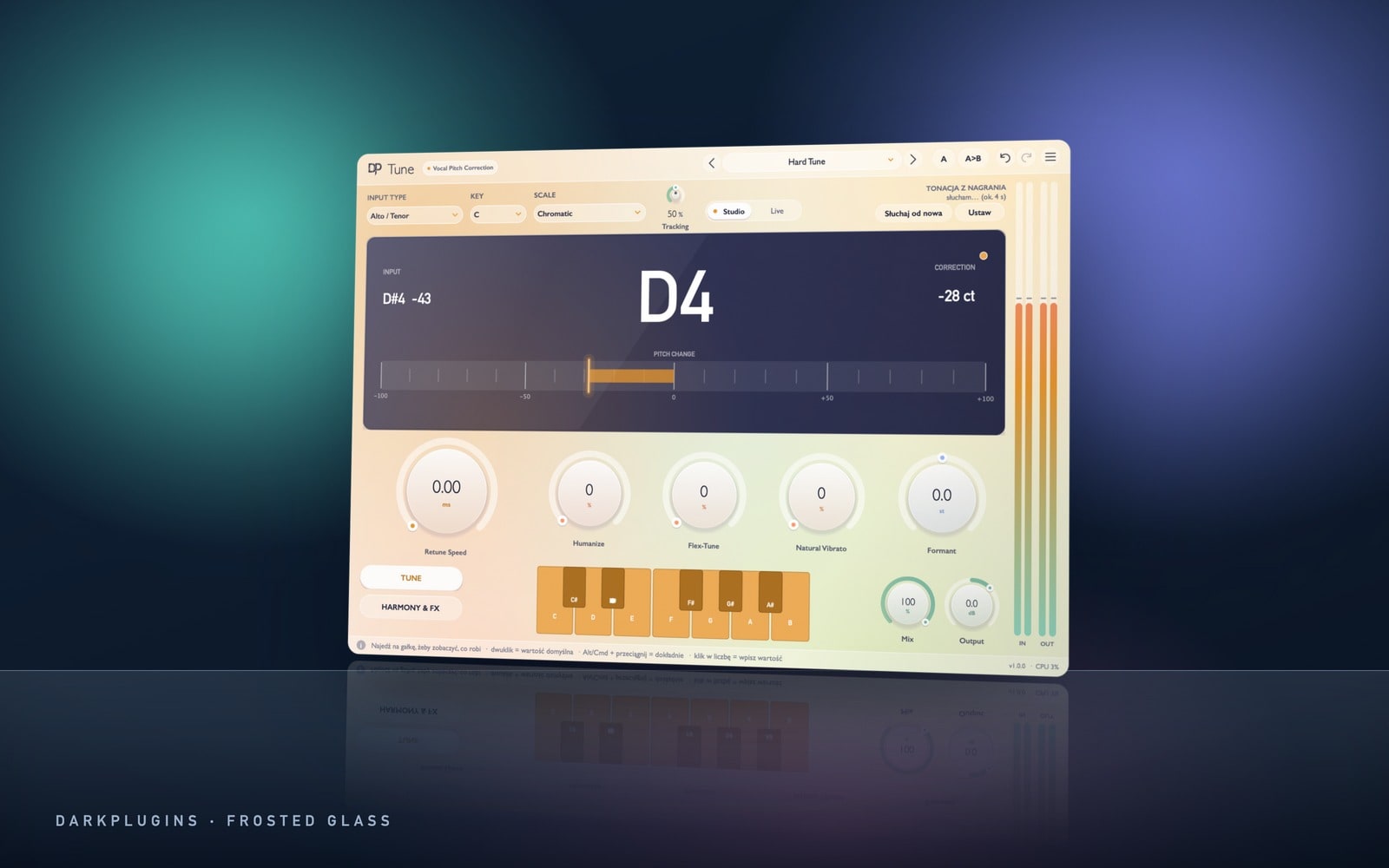
Pitch correction goes before compression. Set the right key first — a wrong key is the classic "robotic wrong note". For the hard trap effect use a retune speed of 0–10 ms; for natural correction 40–80 ms with Humanize. Tune also has Flex-Tune, which leaves notes alone when they're already in tune.
Cut, then compress twice
- Low cut at 80–100 Hz for male voices, 100–140 Hz for female.
- Mud at 200–400 Hz: −2 to −4 dB.
- Harshness at 2–5 kHz: dynamic, only when it pokes out.
First compressor: 4:1, 1–5 ms attack, 40–80 ms release, 3–6 dB on peaks. Second, opto-style: 2–3:1, 2–3 dB. Two gentle stages sound denser than one heavy one.
De-ess, then add air
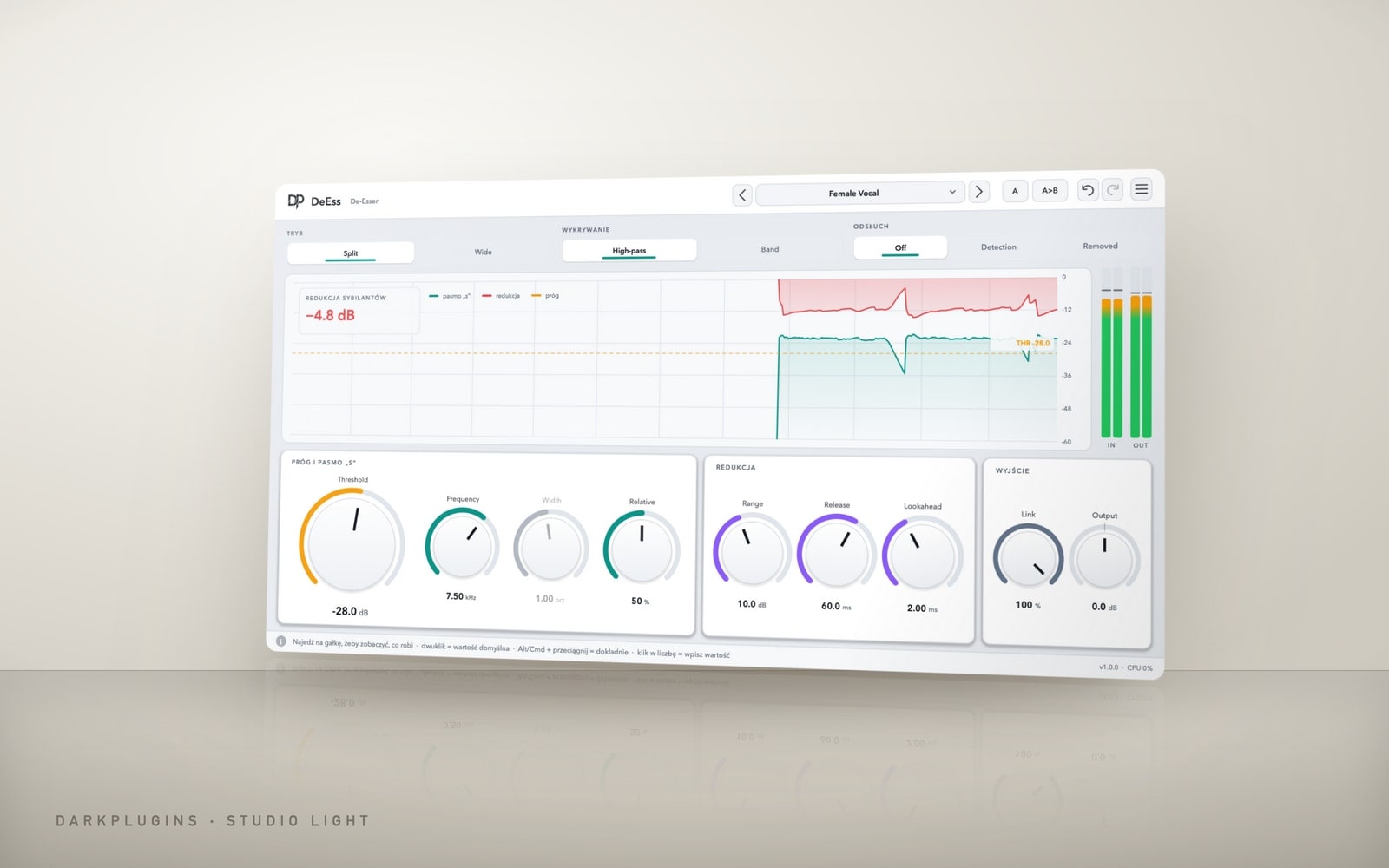
Compression lifts sibilants, so the de-esser goes after it: 5–9 kHz, 3–6 dB only on the S sounds. DeEss in Split mode touches only that band. Then a +2 to +4 dB shelf from 10–12 kHz — air always comes after the de-esser.
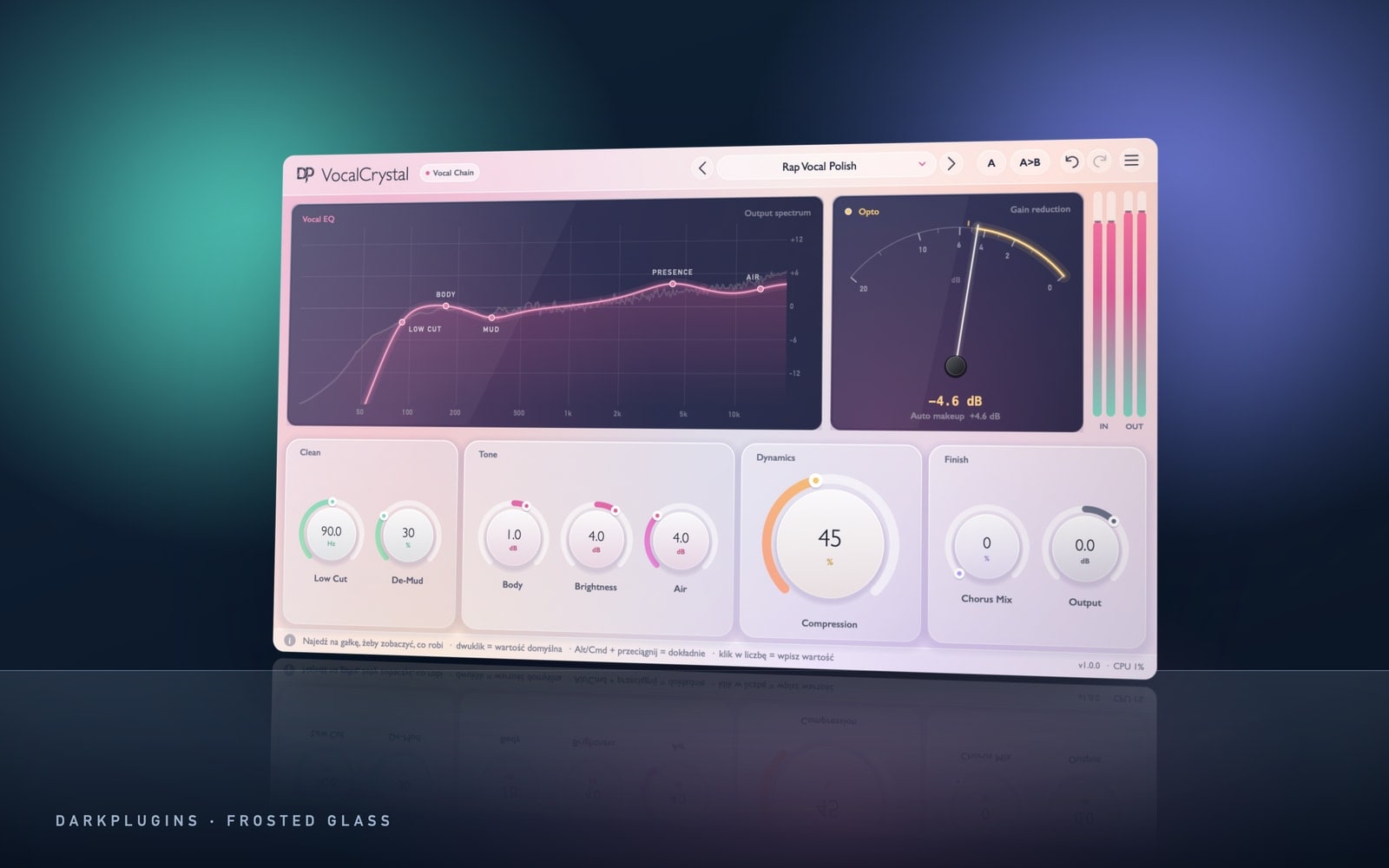
Prefer one window? VocalCrystal packs low cut, De-Mud, opto compression, Brightness and Air.
Space on sends
Plate reverb 1.2–1.8 s with 20–40 ms pre-delay, return filtered from 300 Hz to 8 kHz. Quarter or dotted-eighth delay, 20–30% feedback, ducked under the vocal.
Doubles and ad-libs
Doubles sit 6–10 dB under the lead, panned left and right, with a higher low cut (150–200 Hz). Ad-libs can be a different character entirely — narrower, more delay, more saturation. They build the energy; the lead vocal just has to be clear.