808 & bass
How to make an 808 you can hear on a phone
Your 808 slams on monitors and vanishes on a phone. The fix is in how the bass is built, not in the phone.
DarkPlugins2 min read
In this guide 5
Why the 808 disappears
A phone speaker barely plays below 200–300 Hz. A typical 808 fundamental sits between 40 and 60 Hz (E1 is 41.2 Hz, A1 is 55 Hz), so the phone simply can't reproduce it. What you hear are the harmonics — 110, 165, 220 Hz and up for an A1 — and your ear rebuilds the missing fundamental from them. A pure sine has no harmonics, so on a phone it turns into silence and a click.
Tune it, then shape the attack
A long 808 is a melodic instrument. Tune its root to the key of the track and avoid notes below about 35 Hz — they eat headroom and nobody hears them.
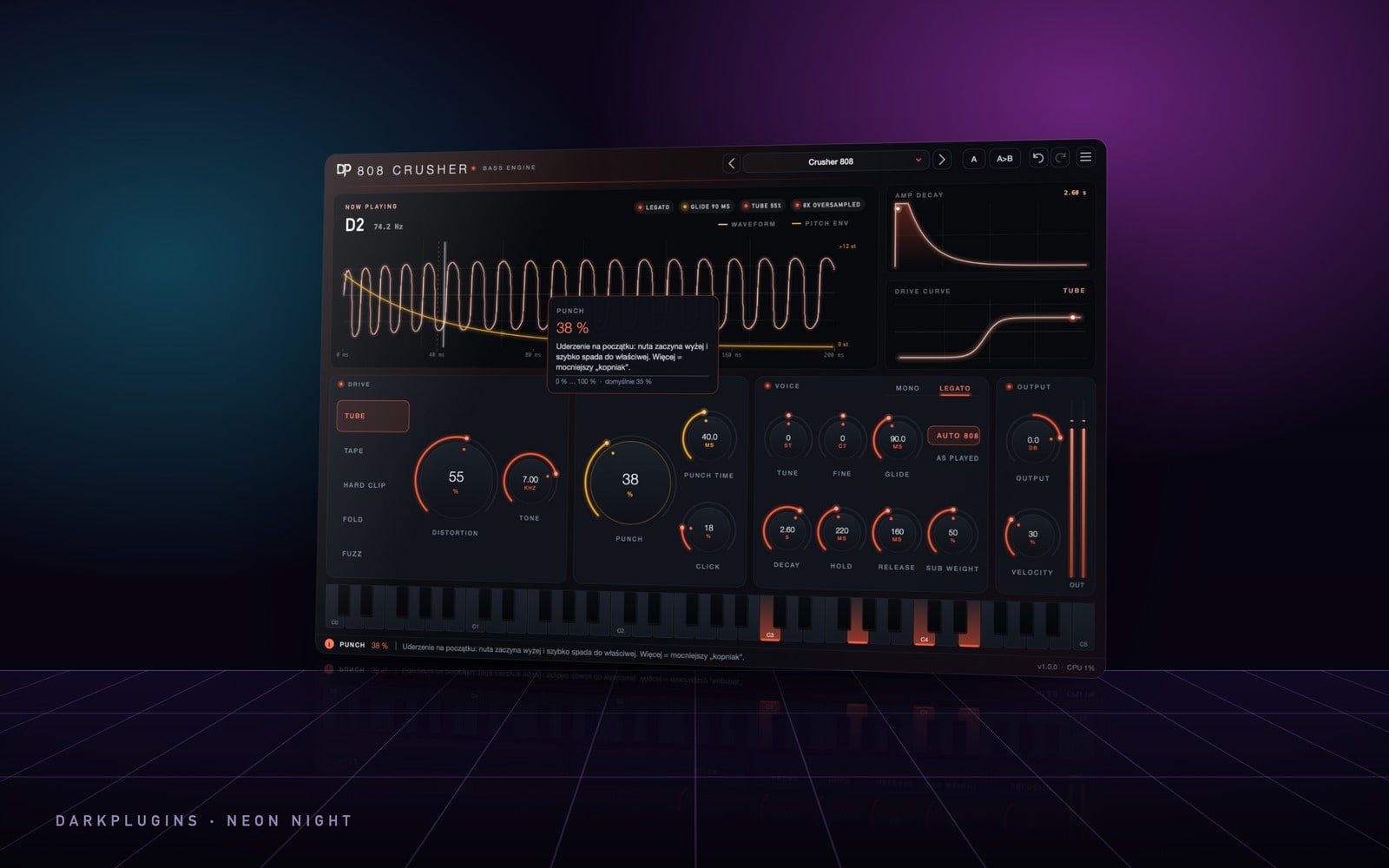
The first 30–80 ms decide whether the 808 hits. Start the pitch 1–2 octaves above the note and drop it fast, then add a short click around 1–3 kHz. In 808 Crusher that's Punch, Punch Time and Click.
Saturation does the rest
- Tube and tape add mostly even harmonics — fuller, not dirty. Hard clip and fuzz add odd ones — a growl you hear on any speaker.
- Use oversampling, or heavy distortion turns into aliasing hash.
- Keep a clean sine underneath (Sub Weight in 808 Crusher) so the low end stays solid.
- Compare versions at matched loudness.
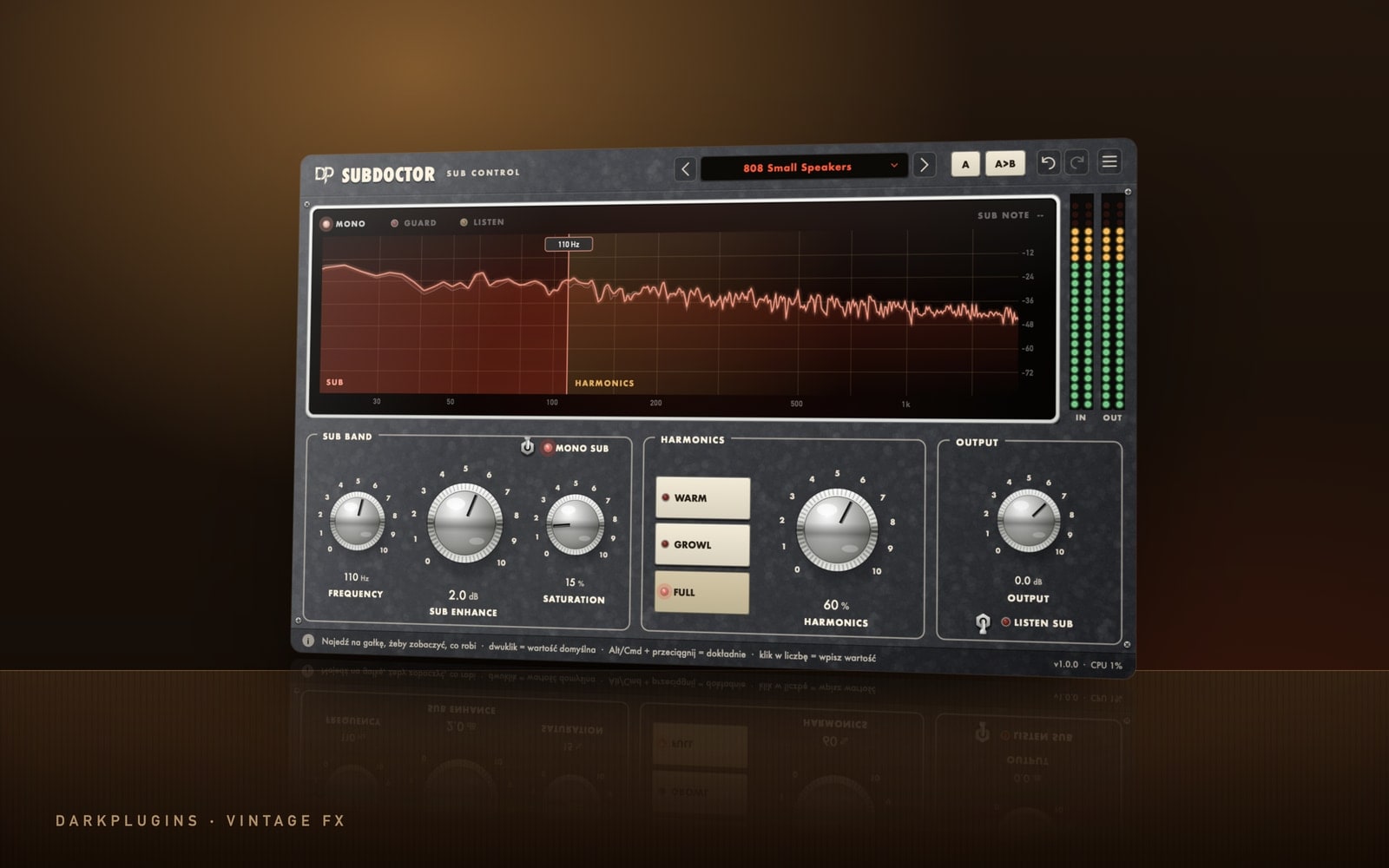
If your 808 is a sample, SubDoctor generates the 2nd to 5th harmonics from the sub band only.
Kick, 808 and the mix
- Keep the kick and the 808 in tune with each other.
- Sidechain the 808 from the kick: 2–4 dB, fast attack, 60–120 ms release.
- Keep everything below about 120 Hz in mono.
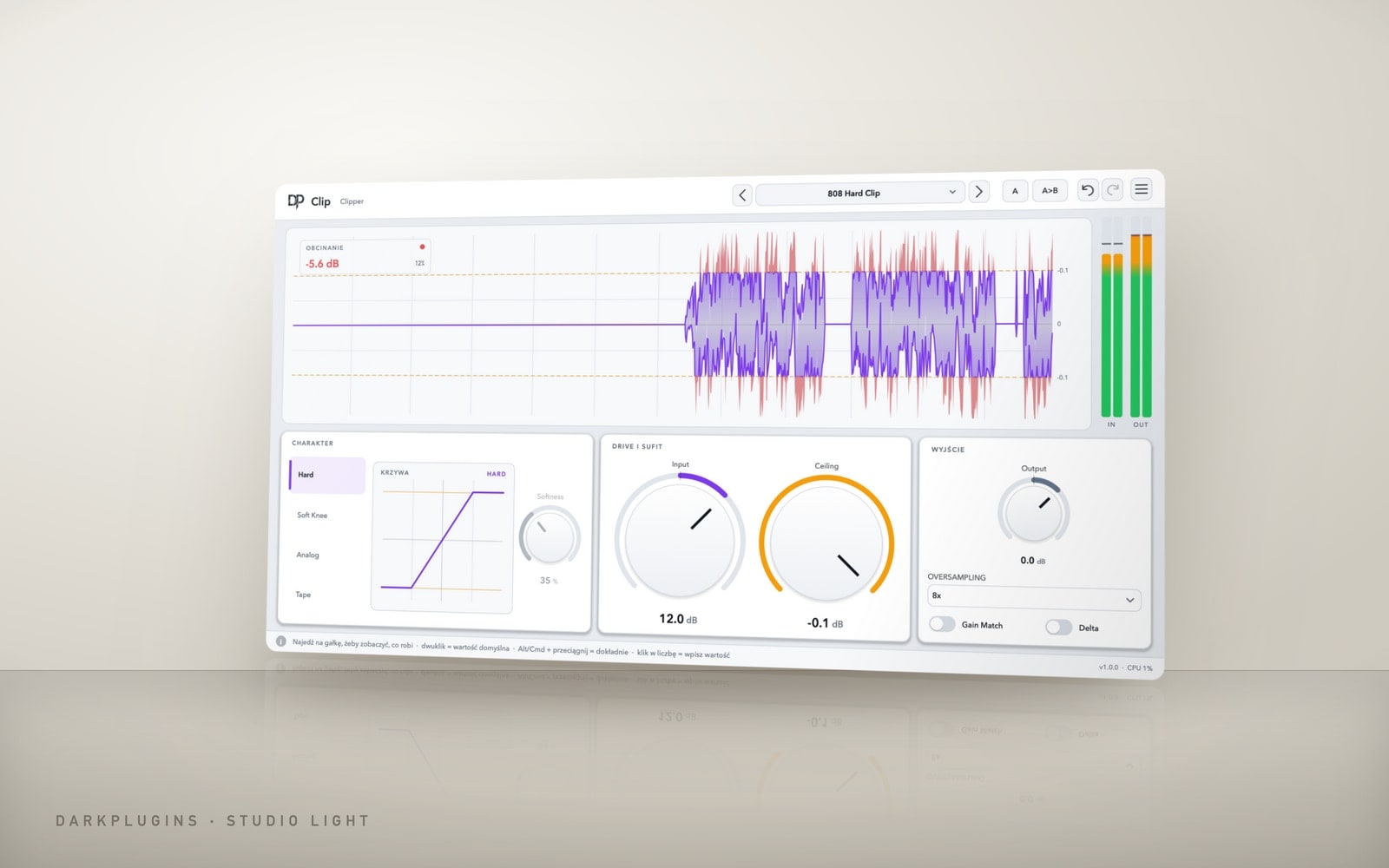
- Clip the 808 peaks by 2–3 dB — Clip with oversampling stays clean.
The 30-second filter test
Put a steep 150–200 Hz high-pass on the master for a moment. That's roughly what a phone hears. If the 808 still carries the rhythm and the notes, you're done. Then export and listen on the phone speaker itself — that's how most people will hear the track first.