Effects
Reverse reverb and delay throws on vocals
A reverse swell into the hook and an echo that catches the last word of a line. Simple effects that are very easy to overdo.
DarkPlugins2 min read
Delay throws
A throw is a delay or reverb on a single word — usually the last one in a line. The rest stays dry and upfront. Put a 100% wet delay on a send and automate the send level: −∞ for the line, −6 to 0 dB on the chosen word, back down after.
Work out the time from tempo: 60,000 ÷ BPM is a quarter note in ms. At 140 BPM a quarter is 429 ms, an eighth 214 ms, a dotted eighth 321 ms.
- Feedback 25–40% — three to five repeats, then gone.
- Filter the return: low cut 200–400 Hz, high cut 4–6 kHz.
- Ping-pong for width, ducking so the echoes only fill the gaps.
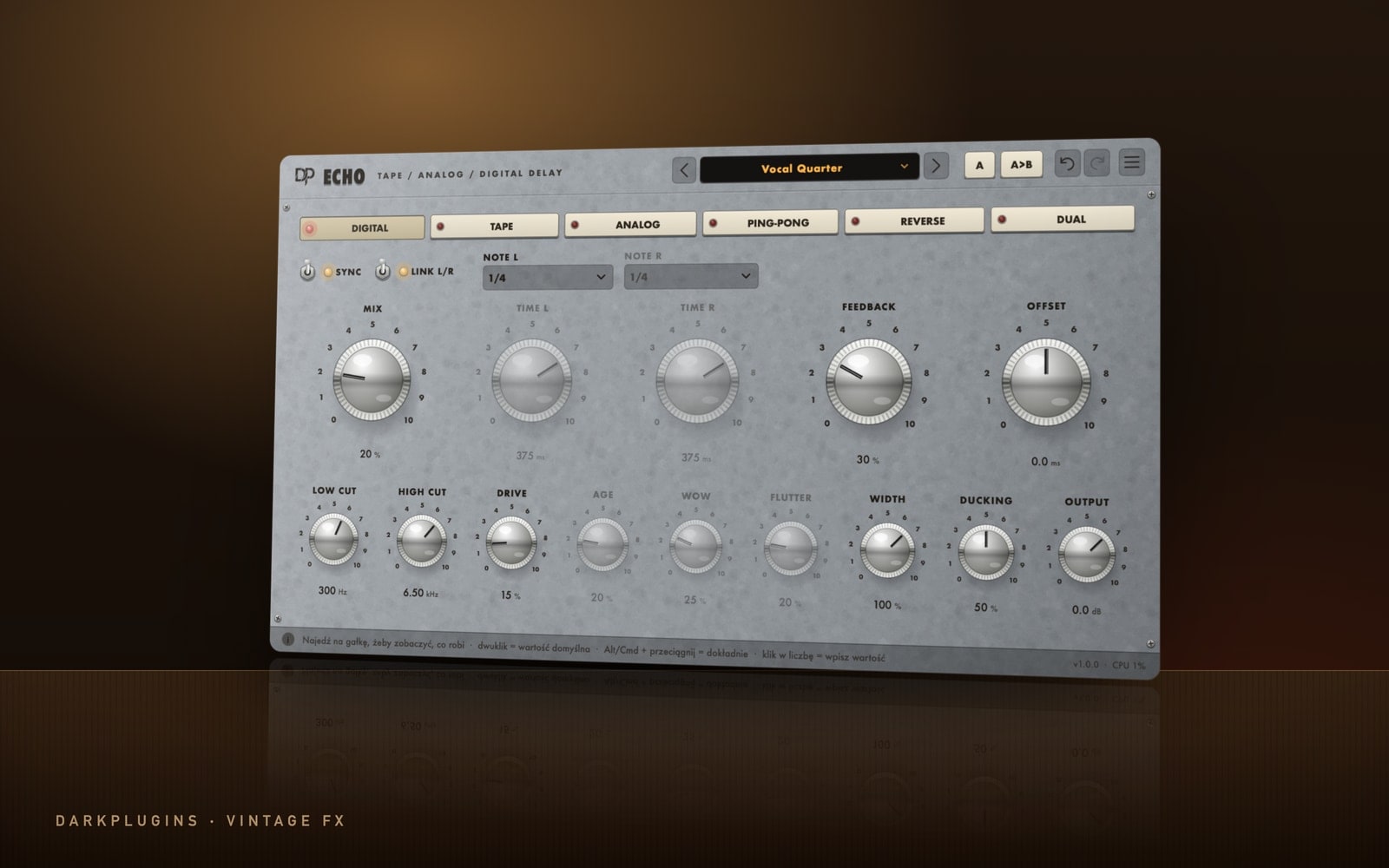
Echo has tape and ping-pong modes, tempo sync with dotted and triplet values, filters in the loop and ducking.
Reverb throws
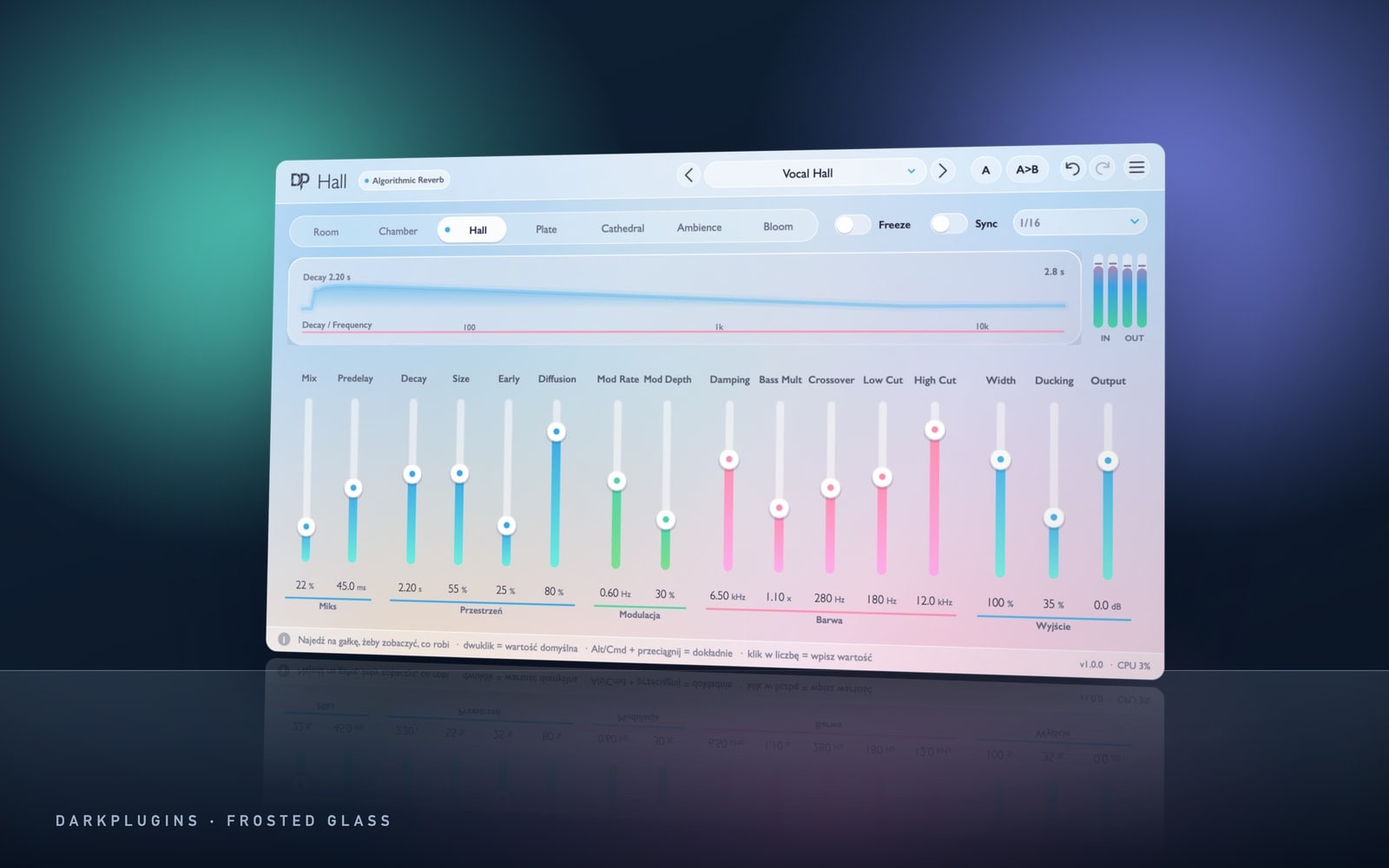
Same idea with a 3–4 s hall or plate and 30–60 ms pre-delay. Hall also has Freeze: catch the last word before the hook, freeze it and let go when the beat drops.
Reverse reverb
The classic way:
- Copy the phrase to a new track.
- Reverse it.
- Add a long, 100% wet reverb and render it with the tail.
- Reverse the render back.
- Line it up so the swell ends exactly on the word.
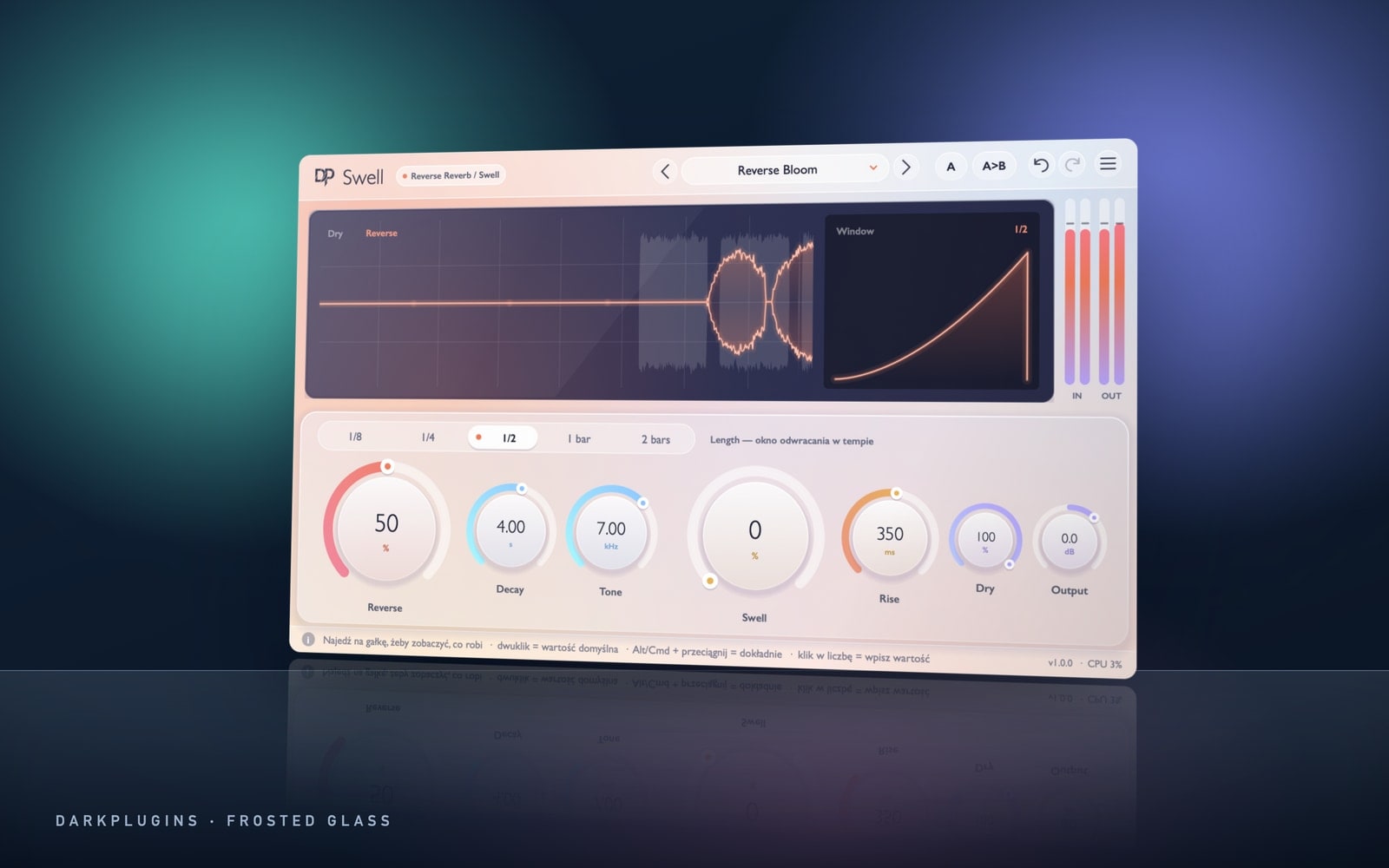
At 140 BPM one bar is about 1.7 s, and a half or full bar swell works best. Swell does it in real time, in tempo-synced windows from 1/8 to 2 bars, so you don't re-render after every edit.
Where to use them
Both effects work best at section edges: the last word of a verse before the hook, the end of every 4- or 8-bar phrase, a gap where the beat drops out. In drill, with busier drums, shorter feedback (15–25%) and stronger ducking work better than long trap-style throws.
Don't overdo it
- One throw per line, not per word.
- Keep the reverse swell 8–12 dB under the dry vocal.
- Check everything in mono.