
Mastering · LUFS · true peak
Mastering plug-ins.
Loud, clean, ready for Spotify.
Mastering a beat at home comes down to three things: peak control, loudness that still sounds good after normalisation, and metering you can trust.
What a mastering plug-in does
A limiter sets a ceiling and raises loudness without letting any peak through — a good one also catches inter-sample (true) peaks. A LUFS meter shows loudness the way Spotify, YouTube and Apple Music measure it. A clipper shaves short peaks before the limiter, and a bus compressor gently glues the mix.
Mastering trap and drill
Gain loudness early: clip drums and 808 by 2–3 dB, control 40–60 Hz and leave about 6 dB of headroom in the mix. On the limiter: −1 dBTP ceiling, oversampling, 2–4 dB of reduction on the loudest hits. A sensible target is −10 to −12 LUFS integrated — Spotify turns everything down to −14 anyway. See −14 LUFS for Spotify.
Watch out for
Mastering won't fix a bad mix. Always compare at matched loudness, measure the whole track, check mono and a phone, and dither when exporting to 16-bit.
DarkPlugins mastering plug-ins
All plug-ins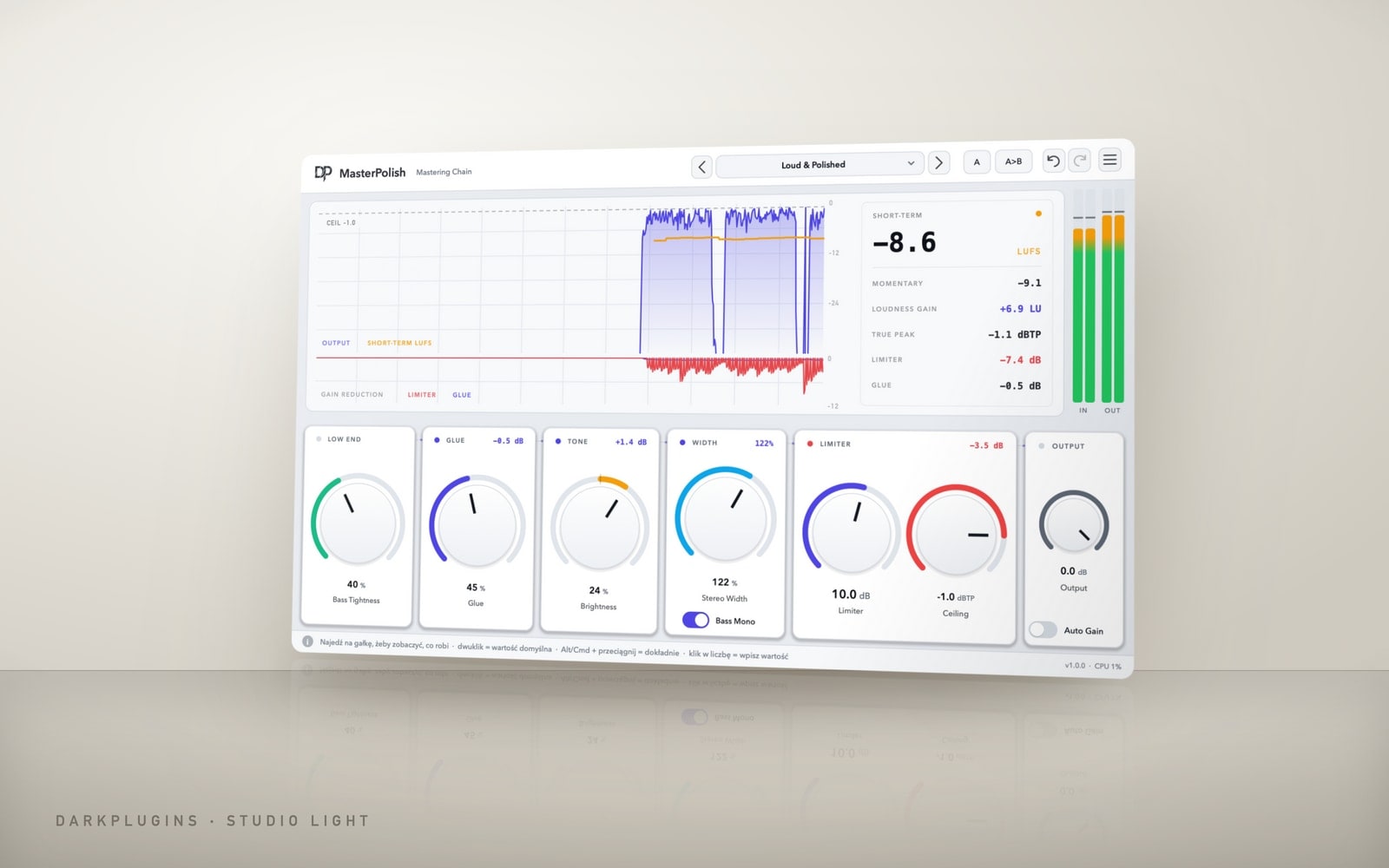 MasterPolish119 złA one-window chain: Low End, Glue, Tone, Width and a true-peak limiter, one knob per module.Mastering
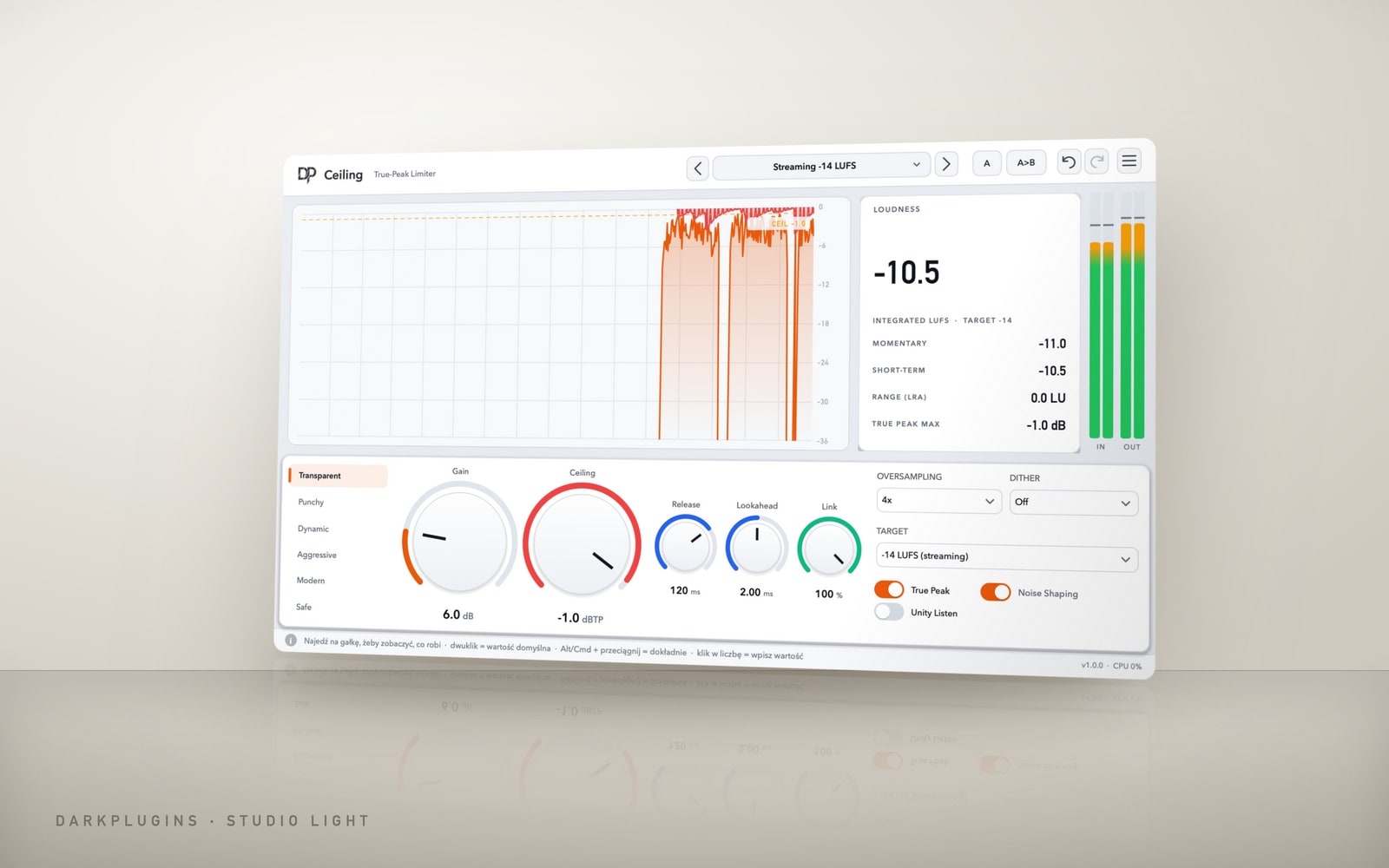 Ceiling149 złTrue-peak limiter with LUFS metering, platform targets and dither for 16-bit exports.Mastering
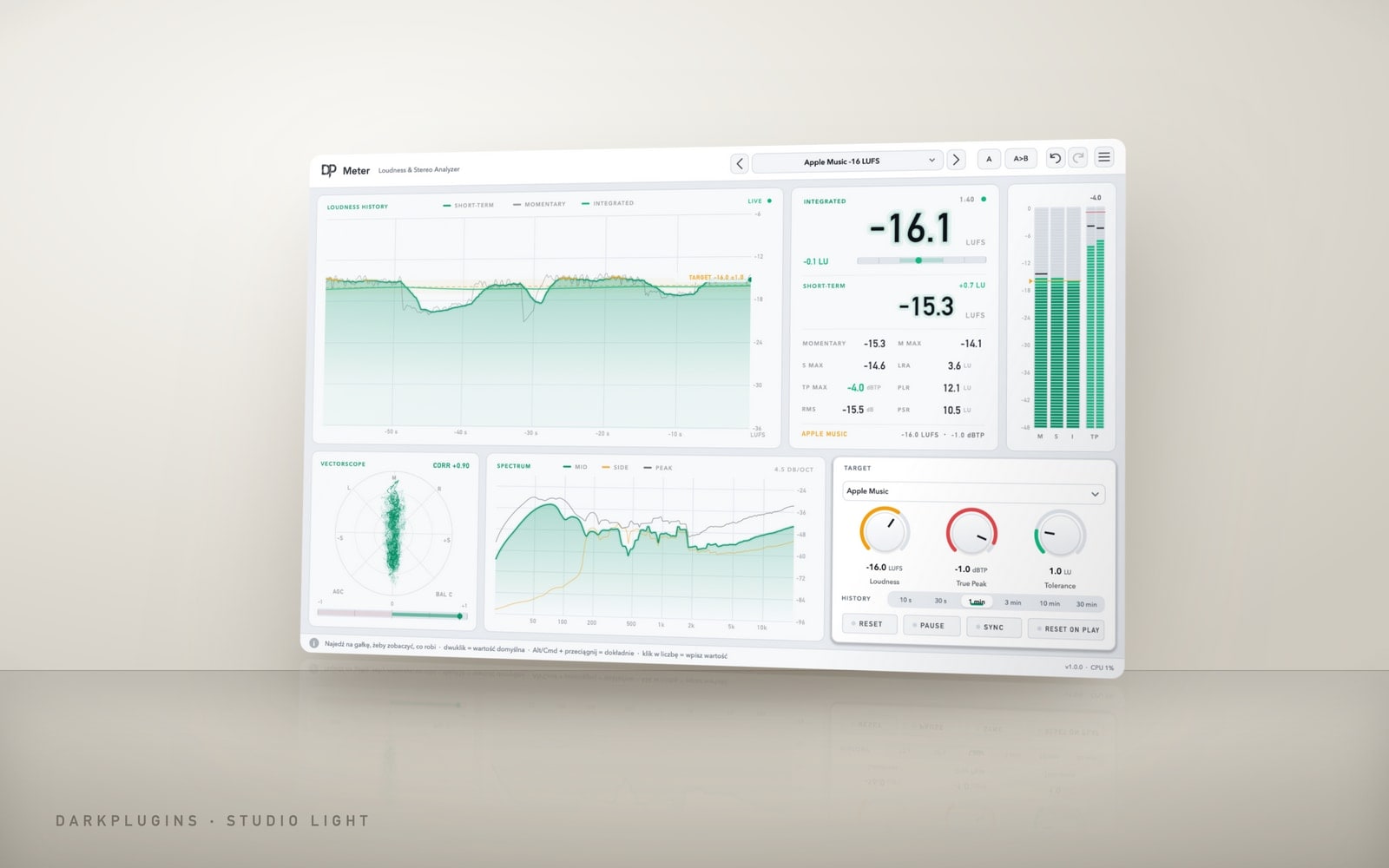 Meter99 złEBU R128 LUFS and true peak — Spotify, Apple Music, YouTube and TikTok targets.Utilities
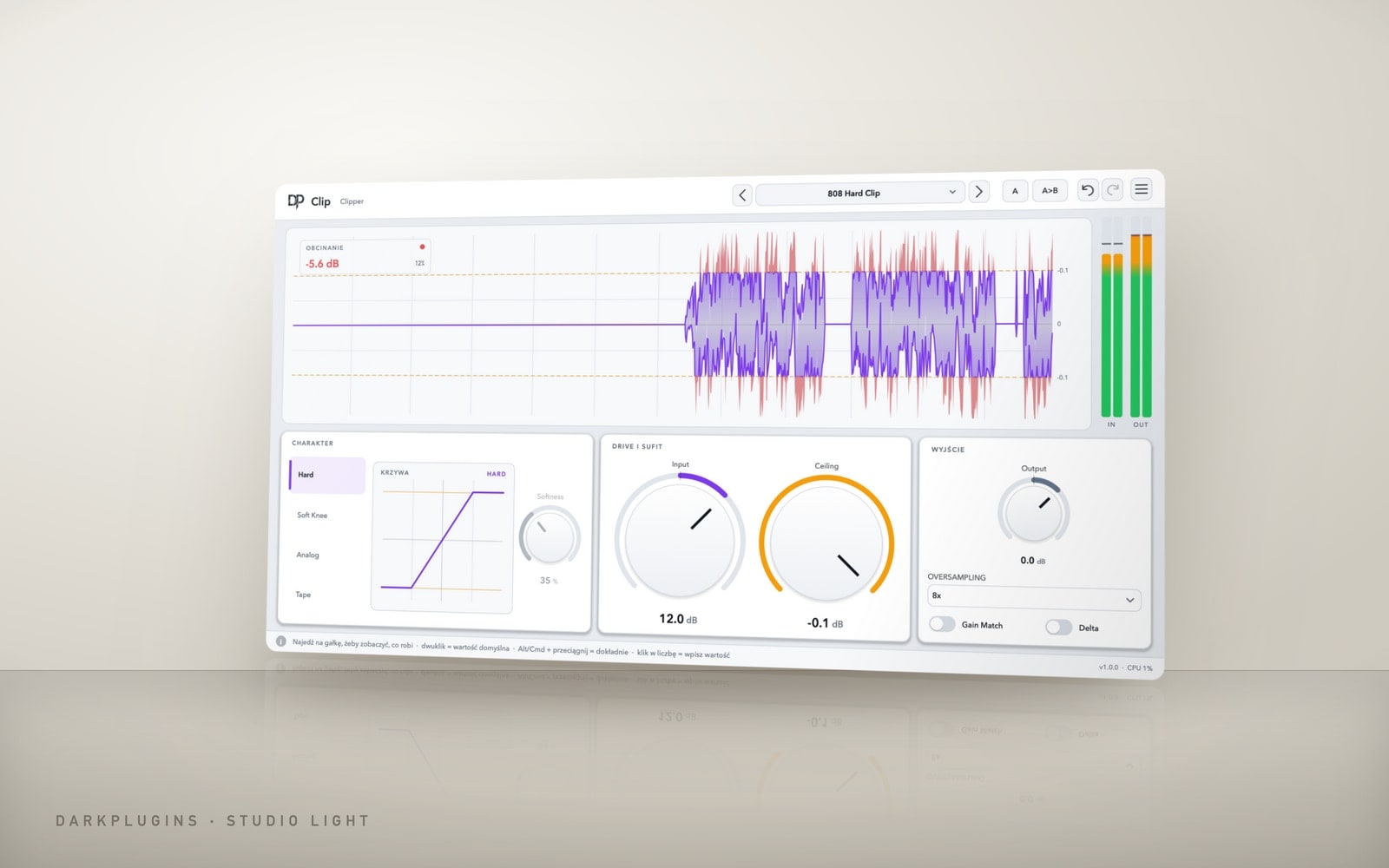 Clip79 złA clipper before the limiter: shaved peaks turn into clean loudness without pumping.EQ & dynamics
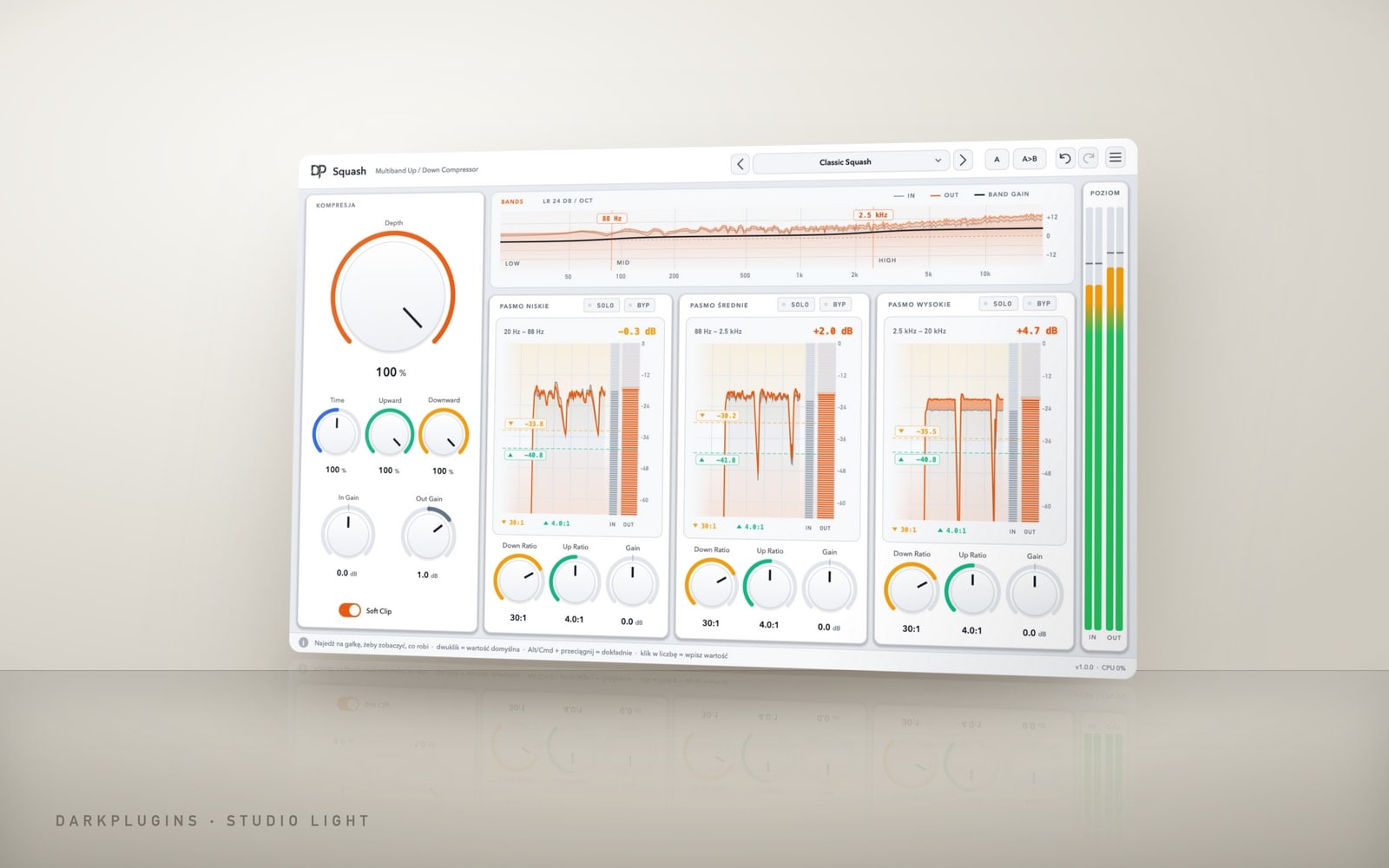 Squash99 złMultiband upward and downward compression — density and sheen from one Depth knob.EQ & dynamics
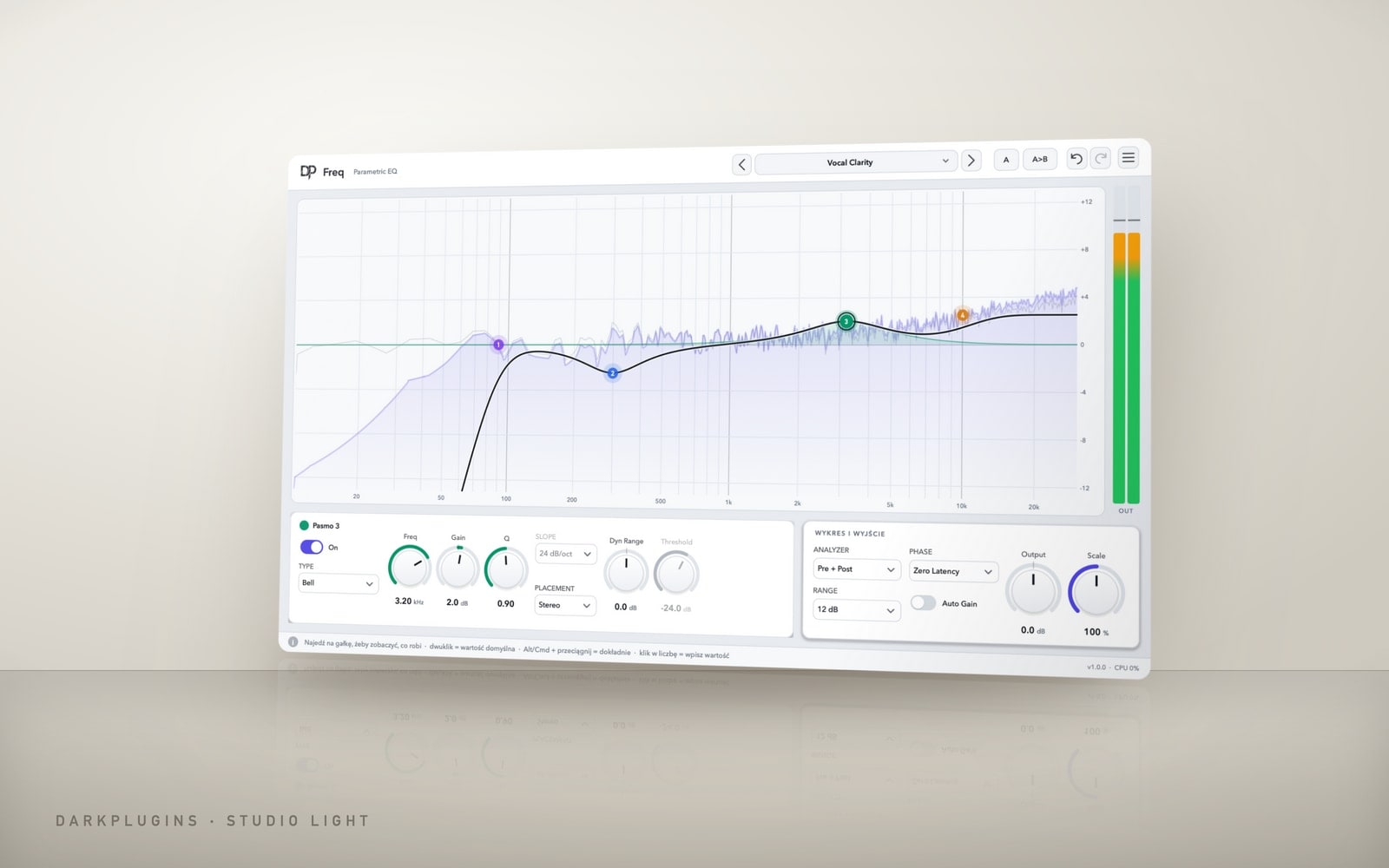 Freq199 złEQ with Linear Phase and Mid/Side for precise moves on the master.EQ & dynamics
MasteringMasterPolish
119 złA one-window chain: Low End, Glue, Tone, Width and a true-peak limiter, one knob per module.
MasteringCeiling
149 złTrue-peak limiter with LUFS metering, platform targets and dither for 16-bit exports.
UtilitiesMeter
99 złEBU R128 LUFS and true peak — Spotify, Apple Music, YouTube and TikTok targets.
EQ & dynamicsClip
79 złA clipper before the limiter: shaved peaks turn into clean loudness without pumping.
EQ & dynamicsSquash
99 złMultiband upward and downward compression — density and sheen from one Depth knob.
EQ & dynamicsFreq
199 złEQ with Linear Phase and Mid/Side for precise moves on the master.
All in One
Every plug-in free for 14 days.
Full versions, no card needed. Once per account and per computer.
Questions
How many LUFS for Spotify?
Spotify normalises to −14 LUFS integrated. Your master can be louder — it will be turned down. For trap, −10 to −12 LUFS with a −1 dBTP ceiling is a sensible target.
Is a limiter enough?
On a simple beat with a good mix, often yes. It works better if you clip drum and 808 peaks first and leave about 6 dB of headroom.
What true peak should I set?
−1 dBTP for masters up to about −14 LUFS, −2 dBTP for very loud ones. MP3 and AAC encoding raises peaks, so 0 dBTP leaves too little room.
Can I master in the same project as the mix?
Yes, many beatmakers do. Finish the mix with nothing on the master first, then add the mastering chain — otherwise you end up mixing into the limiter.
Related guides
All guides- Mastering-14 LUFS for Spotify without killing dynamicsSpotify turns your master down to −14 LUFS anyway. How to set up the mix, clipper and limiter so the track still hits after normalisation.2 min read
- MixingMixing a trap beat from scratchFrom gain staging to the master bus: kick and 808, snare, hi-hats, melody and space in a trap beat — with frequencies, levels and common mistakes.2 min read